A well-known and important herb, common thyme (Thymus vulgaris) is a perennial subshrub and is still used in the kitchen after many centuries to flavour meat, fish and vegetable dishes, in bouquets garni. It is a charming, attractive plant for the herb container. There is a number of thymes that can be used in the
Euphorbia
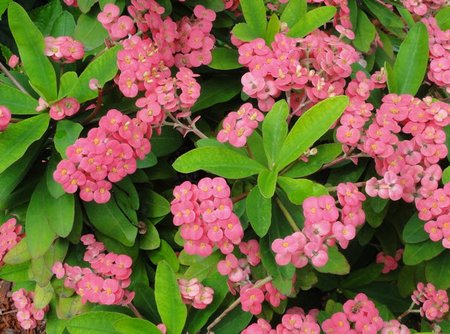
Listed here are the non-succulent flowering Euphorbias with the exception of Poinsettia (E. pulcherrima). The Crown of Thorns (often referred to as a ‘Christ plant’ or the ‘Christ-thorn’) is an old favorite which remains an excellent and undemanding choice for a sunny window. It does not need misting, will withstand some neglect and does not
Arnica montana
Also called Mountain tobacco, arnica (Arnica montana) is a much-valued perennial herb in medicine and arnica ointment is used to treat bruises, sprains, varicose veins and other conditions. It is also used in homeopathy to treat epilepsy, high blood pressure and shock. It is also used internally, because of its irritant effect on the stomach.
Indoor House Plants – Winter Care
For many indoor house plants, the decreasing light levels in late fall are a cue to enter a dormant phase, in preparation for making it through a potentially tough winter ahead. It’s important to allow your indoor house plant to rest over winter. If you continue to water and feed them as you do in
Erica
The Ericas are small shrubby plants which are bought in flower during the winter months. Their tiny leaves and masses of bell-shaped flowers are attractive, but these plants will give disappointing results in a centrally heated room. In hot, dry air the leaves drop very rapidly, so only choose an Erica for display in winter
Calliandra
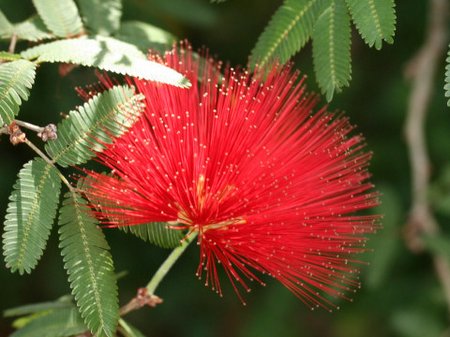
Calliandra is a popular plant in the U.S. but rarely grown in Great Britain. The leaves are made up of a large number of segments and the flowers are made up entirely of stamens. It blooms in winter and the ‘powder-puffs’ last for 6-8 weeks. Calliandra inaequilatera has bright red flowers and dark green foliage.
Conifers For Every Size Garden
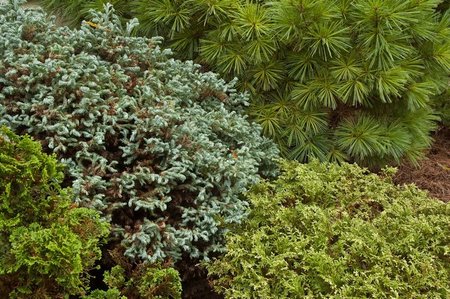
Once the summer flowers are over, conifers come into their own, both as a contrast to the colors of deciduous trees and shrubs, and later as welcome green features through the winter. There is a conifer for every size garden; they vary from neat, mounded dwarf forms, slow-growing, slim-line vertical trees which eventually reach 3m
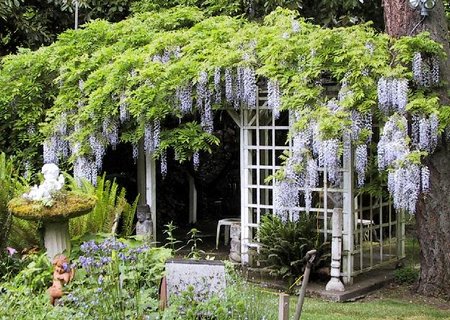
Wisteria
Wisteria is best known for its pea-like blossoms in varying shades of white, rose and lavender. Once established, wisteria is not difficult to maintain. It will survive with average rainfall, and bloom with little to no fertilizer. However, wisteria does need seasonal pruning to ensure spring blooms and compact growing. Otherwise, you could end up
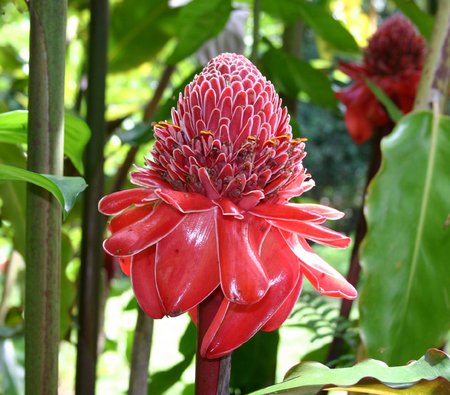
Ginger – The Multipurpose Herb
Ginger (Family Zingiberaceae) is a perennial herb that thrives in most parts of southern Asia, Jamaica, Nigeria, and the West Indies. The plant has recently been cultivated in Florida, California, and Hawaii. Purple orchid-like flowers grow on the stalks of the wild plant. The most common part of the plant known for its multi-faceted use
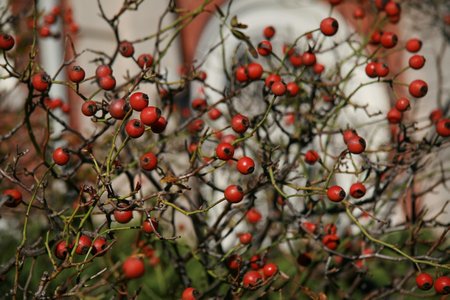
Fall Berries
A big display of fall berries provides a striking seasonal note and also adds a range of colors, from bright red to yellow and white. In time most, except the toxic ones, will get eaten by birds. Meantime, as the fall mists descend and then lift, they will reveal beautiful clumps of tiny colored balls
Living Stones
The Living Stones are interesting rather than beautiful, as they mimic the pebbles which abound in their natural habitat. Living Stones are flowering succulents that blend into their native environment because they grow in a stemless clump resembling small stones. All are members of the Mesembryanthemum family and each plant consists of a pair of
Cyclamen
Cyclamen is one of the most popular of all winter-flowering pot plants and its charm is obvious. Compact growth, beautiful swept-back flowers on long stalks and decorative foliage which is patterned in silver and green. The blooms are in bright colors or pastel shades, large and eye-catching or small and perfumed. Most Cyclamens are unfortunately