
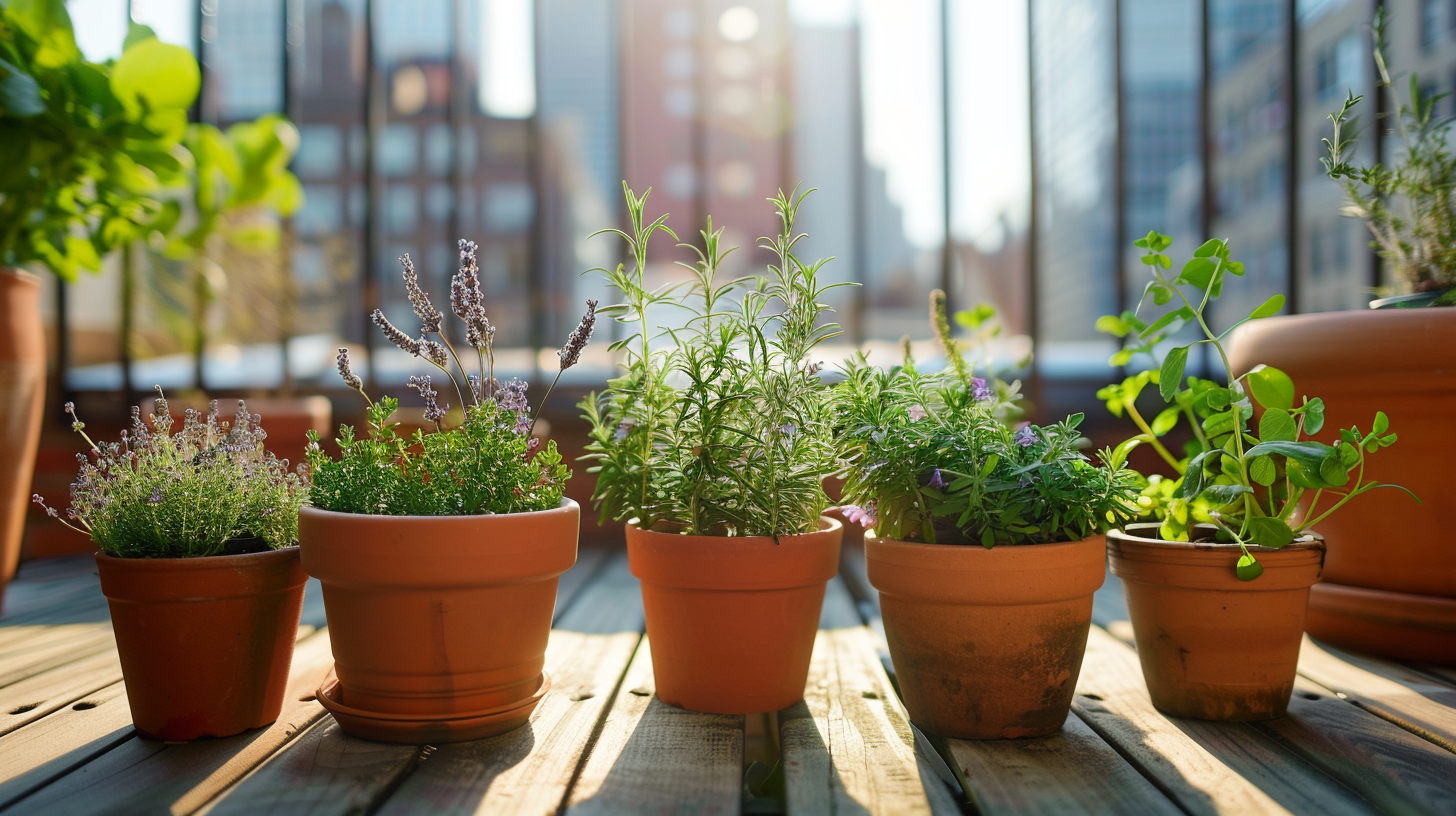
As someone who’s killed more basil plants than I care to admit in my tiny Brooklyn apartment, I learned the hard way that annual herbs and busy urban life don’t always mix. That’s when I discovered the game-changing world of perennial herbs – the “set it and forget it” solution that keeps giving year after year.
If you’re tired of replanting your herb garden every spring or watching your cilantro bolt the moment you turn your back, perennial herbs might be your gardening salvation. These resilient plants not only survive our hectic urban lifestyles but actually thrive with minimal intervention, making them perfect for the time-strapped city dweller who still wants fresh herbs at their fingertips.
Why Perennial Herbs Are Perfect for Urban Gardens
Unlike their annual cousins that demand constant replanting and attention, perennial herbs are the reliable friends of the plant world. They establish strong root systems, adapt to container life, and many actually prefer the slightly neglectful care that matches our busy schedules. Plus, they’re incredibly cost-effective – spend once, harvest for years.
The real beauty of perennial herbs lies in their resilience. Most tolerate drought conditions once established, handle temperature fluctuations better than annuals, and many are naturally pest-resistant. For urban gardeners dealing with pollution, limited space, and unpredictable care schedules, these traits are absolute gold.
Essential Considerations for Urban Herb Gardening
Container Selection: Most perennial herbs adapt beautifully to container life, but they need room to spread. Choose pots at least 12-18 inches wide for spreading herbs like oregano and mint. Drainage is non-negotiable – more herbs die from waterlogged roots than drought.
Light Requirements: Assess your space honestly. That “sunny” fire escape might only get 4 hours of direct sun, which works for some herbs but not others. Don’t worry – there are options for every light situation.
Climate Considerations: Your USDA Hardiness Zone determines which perennial herbs will survive your winters outdoors. Container plants are typically one zone less hardy than their in-ground counterparts, so plan accordingly.
Top 15+ Perennial Herbs for Urban Gardens
| Herb | USDA Zones | Sun Requirements | Primary Uses | Urban Garden Notes |
|---|---|---|---|---|
| Rosemary | 7-10 | Full sun (6+ hours) | Cooking, aromatherapy | Excellent in containers, drought-tolerant |
| Thyme | 4-9 | Full sun to partial shade | Cooking, ground cover | Compact, perfect for small spaces |
| Oregano | 4-10 | Full sun to partial shade | Cooking, medicinal tea | Spreads readily, great for beginners |
| Sage | 4-8 | Full sun | Cooking, medicinal | Beautiful silvery foliage, deer resistant |
| Chives | 3-10 | Full sun to partial shade | Cooking, pest deterrent | Produces edible flowers, very hardy |
| French Tarragon | 4-8 | Full sun to partial shade | Cooking (French cuisine) | True tarragon from cuttings only |
| Lavender | 5-9 | Full sun | Aromatherapy, cooking, crafts | Requires excellent drainage |
| Mint (Spearmint) | 4-9 | Partial shade to full sun | Cooking, beverages, aromatherapy | Aggressive spreader, contain it! |
| Lemon Balm | 4-9 | Partial shade to full sun | Tea, aromatherapy, pest repellent | Self-seeds freely, very low maintenance |
| Winter Savory | 5-9 | Full sun | Cooking (bean dishes) | Compact shrub, excellent dried |
| Marjoram | 7-9 | Full sun | Cooking, medicinal tea | Tender perennial, bring indoors in cold climates |
| Catnip | 3-9 | Full sun to partial shade | Cat enrichment, insect repellent | Easy to grow, cats love it |
| Fennel | 4-9 | Full sun | Cooking, butterfly garden | Tall plant, needs space |
| Lemon Verbena | 8-10 | Full sun | Tea, cooking, aromatherapy | Tender, overwinter indoors |
| Stevia | 9-11 | Partial shade | Natural sweetener | Treat as annual in most US zones |
| Greek Oregano | 5-10 | Full sun | Cooking | More flavorful than common oregano |
| Pineapple Sage | 8-10 | Partial shade | Tea, garnish, hummingbird attractor | Beautiful red flowers in fall |
| Cuban Oregano | 9-11 | Partial shade | Cooking | Succulent-like, excellent houseplant |
Getting Started: Your First Perennial Herb Garden
For Beginners: Start with the “Big Three” – chives, thyme, and oregano. These virtually indestructible herbs tolerate neglect and provide maximum cooking utility.
For Partial Shade: Don’t let limited sun discourage you. Mint, lemon balm, and chives actually prefer some afternoon shade in hot climates.
For Full Sun: Rosemary, lavender, and sage thrive in sunny spots and create a Mediterranean vibe even on the smallest balcony.
Maintenance Tips That Actually Work
Watering Wisdom: Most perennial herbs prefer to dry out between waterings. When in doubt, wait another day. A moisture meter takes the guesswork out of this.
Pruning for Productivity: Regular harvesting is the best maintenance. Cut stems back by one-third in spring to encourage bushy growth, and don’t be shy about using your herbs – they love being trimmed.
Winter Care: Hardy herbs can often survive outdoors in containers with some protection. Wrap pots in bubble wrap, move them against a south-facing wall, or bring tender perennials indoors.
Common Mistakes to Avoid
The biggest mistake I see urban gardeners make is overcomplicating things. These plants evolved to survive in challenging conditions – your job is simply not to kill them with kindness. Overwatering, over-fertilizing, and overthinking are the enemies of a successful herb garden.
Another pitfall is ignoring your microclimate. Your rooftop garden in Phoenix has vastly different conditions than a fire escape in Seattle, even within the same hardiness zone.
Making It Work for Your Lifestyle
The beauty of perennial herbs is that they adapt to your schedule, not the other way around. Going away for a week? Most established herbs will be fine. Forgot to water for a few days? They’ll likely thank you for it.
Start small, learn what works in your specific space, then expand. There’s something deeply satisfying about snipping fresh rosemary for your morning potatoes, knowing that same plant will keep producing for years to come.
Your urban herb garden doesn’t need to be Instagram-perfect – it just needs to work for you. With perennial herbs, you’re not just growing plants; you’re investing in years of fresh flavors, natural aromatherapy, and the quiet satisfaction that comes from nurturing something green in our concrete world.